Corporate Golf Outing Planning: The Checklist for Events That Actually Build Business

Let me tell you about a corporate golf outing that cost $40,000 and produced nothing.
Great course. Premium catering. Logo'd gifts for every player. The sales team invited their top prospects, played 18 holes, ate a nice dinner, and went home. Six months later, not a single deal had closed from that guest list.
The problem wasn't the golf. The problem was that nobody thought about what the golf was supposed to accomplish.
Corporate golf outings are business investments disguised as recreational events. They can strengthen client relationships, reward loyal customers, build internal team cohesion, and create selling opportunities in a relaxed environment. But only if you plan them that way.
Too many companies treat corporate outings as perks—something nice to do because executives like golf. There's no strategy, no intentional relationship-building, no follow-up system. The money gets spent, the golf gets played, and the business value never materializes.
This checklist is for corporate golf outing planning that actually delivers ROI. Whether you're hosting clients, entertaining prospects, rewarding employees, or building team relationships, every element should serve a business purpose.
Our golf outing planning guide covers tournament logistics comprehensively. This post focuses specifically on the corporate context—how to structure an outing that justifies its cost through business results.
I've planned corporate golf events for companies ranging from regional businesses entertaining local clients to Fortune 500 firms hosting national customer appreciation days. The scale varies; the strategic principles don't.
If you're going to spend the money, spend it wisely.
Define Your Business Objective First

Before you book a tee time, answer this: what business outcome justifies this expense?
"Client appreciation" isn't specific enough. "Strengthen relationships with our top 20 accounts to improve retention rates" is a business objective. "Give the sales team a fun day" isn't strategy. "Create relaxed selling environment with Q4 pipeline prospects" is.
Common corporate golf outing objectives:
Client retention: Deepening relationships with existing accounts. The outing becomes a touchpoint that reinforces why they do business with you. Success metric: renewal rates among attendees versus non-attendees.
Prospect conversion: Moving deals forward in a low-pressure environment. Golf creates conversation time impossible in conference rooms. Success metric: pipeline progression within 90 days of event.
Customer appreciation: Rewarding loyalty and reinforcing value. Often tied to spend thresholds or tenure milestones. Success metric: satisfaction scores, continued engagement.
Team building: Internal events for employee cohesion, department bonding, or cross-functional relationship building. Success metric: engagement surveys, collaboration improvements.
Partner relationships: Strengthening ties with vendors, distributors, or strategic partners. Success metric: partnership health indicators.
Your objective shapes everything. A prospect-focused outing needs strategic pairing of hosts and guests. A team-building outing needs formats that mix departments. An appreciation event needs recognition elements a prospecting event doesn't.
Write the objective down. Share it with everyone involved in planning. When decisions arise—who to invite, what format, how much to spend—the objective provides the answer.
If you can't articulate the business objective, reconsider the event. Golf is expensive. Without clear purpose, you're just subsidizing recreation.
Our corporate retreat planning checklist starts with the same principle—objectives before logistics. It's even more critical when the event is explicitly a business investment.
The Guest List Is Your Strategy
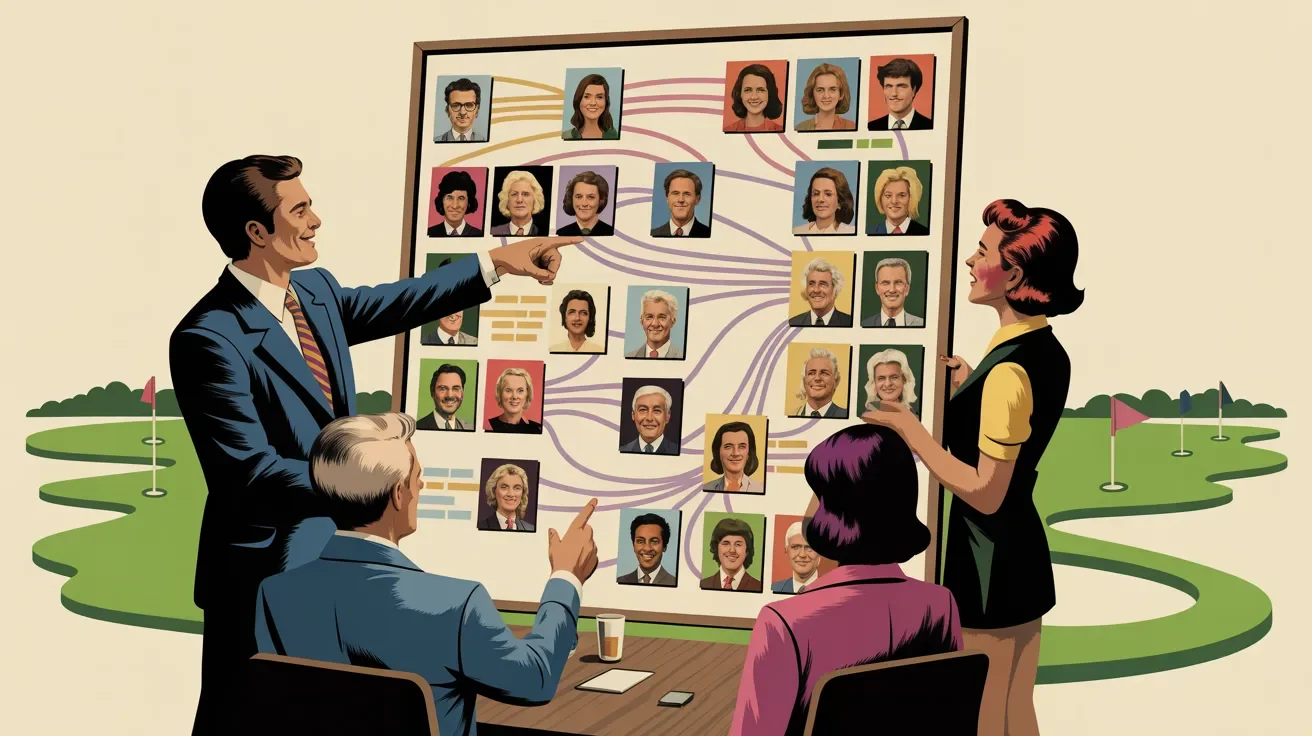
Who you invite determines whether the outing produces results. The guest list isn't administrative—it's strategic.
For client-focused outings:
Invite accounts where relationships need strengthening—not just the ones who already love you. The client you're worried about losing. The account that's been quiet lately. The relationship that's become transactional. Golf creates conversation space that business meetings don't.
For prospect-focused outings:
Invite prospects where personal relationship would accelerate the deal. Not cold leads—prospects who've engaged but haven't committed. The decision-maker you can't get a meeting with. The influencer who could champion your solution internally. Golf levels hierarchies in ways offices don't.
For internal team outings:
Mix deliberately. Don't let departments cluster. Pair people who should collaborate but don't. Include leadership alongside individual contributors. The org chart disappears on the golf course.
Match hosts to guests intentionally. Your top salesperson shouldn't play with their best friend from the client side—they should play with the relationship that needs work. Assign foursomes based on strategic value, not convenience.
Consider skill levels. A prospect who shoots 110 shouldn't be paired with three scratch golfers. Skill mismatches create discomfort. Group similar abilities when possible, or choose formats (scramble) that minimize skill pressure.
Executive participation matters. When your leadership plays alongside clients or prospects, it signals importance. Save executive time for the highest-value relationships.
Send invitations that reflect the relationship. Personal outreach from the relationship owner, not a generic marketing email. The invitation itself is a touchpoint—make it feel personal even when you're inviting dozens.
The guest list is your strategy made tangible. Get it right.
Foursome Construction—Where Relationships Happen

Four people spend 4-5 hours together on a golf course. That's more uninterrupted relationship time than most business interactions provide in a year. Use it wisely.
The standard corporate formula: two hosts, two guests. Your people paired with their people. Enough company representation to guide conversation and ensure guests feel attended to. Enough guests to justify the investment.
Match relationship owners to their accounts. The salesperson should play with their client. The account manager with their customer. Relationships deepen when existing connections get quality time together.
Add strategic introductions. If your VP of Engineering should know the client's CTO, put them in the same foursome. Golf creates organic introduction opportunities that feel natural rather than forced.
Consider personality dynamics. The extroverted client with the introverted account manager might need a buffer—a third person who keeps conversation flowing. Some pairings need help; others click naturally.
Brief your hosts. Before the event, ensure every company participant knows who they're playing with, what the relationship status is, and what you're hoping to accomplish. "Just have fun" isn't a briefing. "We're trying to expand the relationship into their western region—see if you can learn about their plans" is.
Don't let guests feel stranded. If a guest's assigned host cancels last-minute, have a backup plan. A guest in a foursome where they know nobody and nobody knows their business is a wasted invitation.
For team-building outings, mix aggressively. The point is breaking silos. Put the finance person with the engineers. The new hire with the veteran. The quiet analyst with the outgoing sales rep.
Foursome construction is relationship engineering. Random assignments waste the opportunity.
Format Selection for Business Outcomes

Format affects the experience—choose based on what you're trying to accomplish.
Scramble is almost always right for corporate outings. Here's why:
Everyone contributes something. The client who's a 25-handicap doesn't spend four hours embarrassed. The pressure's off. The conversation flows because nobody's grinding over a difficult shot. It's social golf, not competitive golf.
Best ball works when everyone's a legitimate golfer. If your guest list is single-digit handicaps who'd find scramble boring, best ball adds challenge while keeping team dynamics. But skill mismatches make this format frustrating for weaker players.
Individual formats are rarely appropriate. Corporate outings aren't about crowning a champion—they're about relationship building. Formats that isolate players defeat the purpose.
Consider your objectives:
Client relationship building? Scramble. Keep it light, keep it social, keep conversation flowing.
Competitive team building? Best ball with clear team identity. Competition creates bonding, but keep it friendly.
Prospect entertainment? Scramble, absolutely. You want prospects relaxed and talking, not stressed about their score.
Executive-level relationship? Whatever your executives and their counterparts prefer. At senior levels, golf preferences matter. Ask.
Add elements that serve business goals:
On-course betting (skins, closest to pin) creates shared moments. Mulligans for purchase add levity. Team photos at signature holes create shareable memories. None of these are about the golf—they're about the experience.
Pace of play matters for business. A round that drags past five hours exhausts everyone. Scramble typically moves faster than individual formats. Firm start times and reasonable field sizes keep things moving.
Our golf outing planning guide covers format mechanics in detail—this is about choosing the right format for business context.
Course Selection—More Than Just a Nice Layout

The course is your venue. Choose it like you'd choose a conference hotel.
Difficulty level should match your guests. A championship course that humiliates casual golfers doesn't build relationships—it creates frustration. Unless your guest list is skilled, choose a playable course over a prestigious one.
Facilities matter as much as fairways. Evaluate the clubhouse, dining options, meeting spaces, and event areas. A great course with a terrible awards dinner setup is a problem.
Location affects attendance. A course 90 minutes from your guests' offices means half-day travel. Closer is generally better for corporate events—especially weekday outings where people are squeezing golf around work.
Service quality varies wildly. Some courses treat corporate events as valued clients. Others treat them as interruptions to regular play. Ask for references from other corporate clients. Talk to the tournament coordinator, not just the sales manager.
Exclusivity expectations depend on your guests. Top clients expect to feel special. A private club or exclusive course signals importance. Less critical accounts might be perfectly happy at a quality public course.
Catering capabilities affect the full experience. Can the course handle your awards dinner? Do they require outside catering? What's the quality like? A mediocre meal after great golf leaves a mediocre final impression.
Branding and customization flexibility. Can you put your logo on carts, scorecards, flags? Set up registration with company branding? Have sponsors (if applicable) place signage? Course policies vary.
Price is a factor, not the factor. A $150/player course that delivers flawless execution creates more business value than a $75/player course with chaos. Invest appropriately for your audience.
Visit before committing. Walk the registration area, first tee, turn, and dining space. Visualize your guests' experience from arrival to departure.
The Experience Beyond Golf

Golf is four hours. The full experience is six to eight. What happens before and after the round shapes perceptions as much as the golf itself.
Arrival experience sets the tone. Valet service, bag handling, welcome signage, organized registration—guests should feel expected and valued from the moment they pull in. Confusion at check-in signals amateur hour.
Player gifts create lasting impressions. Quality matters more than quantity. A premium golf shirt with subtle branding beats a bag stuffed with cheap trinkets. Choose items people will actually use and associate with your company.
Branded materials—welcome packets, scorecards, signage, gift items—should look professional. Your brand is on display all day. Make it look like it belongs on a golf course, not a trade show booth.
On-course hospitality elevates the experience. Premium beverage selections, quality snacks at the turn, attentive cart service. The details communicate how much you value your guests.
The awards dinner is your closing argument. This is where relationships cement. Good food, comfortable setting, appropriate recognition, and time for conversation. Rush through dinner, and you've undercut everything the day built.
Consider non-golfers. Spouses, executives who don't play, support staff—if they're attending, what's their experience? Some courses offer spa services, tennis, or other activities. Alternatively, make it clearly a golf-only event and don't invite non-players.
Professional photography captures the day. Action shots on course, group photos at dinner, candid networking moments. These become content for follow-up, social media, and next year's promotion. Share these images appropriately—they extend the event's impact.
The golf is the centerpiece, but the supporting experience determines whether guests feel treated to something special or just attended an outing.
Briefing Your Team for Business Success

Your company representatives are executing strategy, not just playing golf. Brief them accordingly.
Every host should know their guests. Account history. Current relationship status. Business opportunities. Potential concerns. A cheat sheet for each foursome ensures nobody's flying blind.
Define conversation goals. Not scripts—but directions. "Learn about their expansion plans." "Understand who else influences purchasing decisions." "Gauge satisfaction with our service team." Give hosts something specific to discover.
Set relationship expectations. This isn't a vacation day. Hosts should be attentive to guests, ensure they're comfortable, keep conversation flowing, and represent the company well. Professional but relaxed. Generous but not excessive.
Remind everyone: listen more than talk. Golf creates space for clients to share things they'd never mention in a business meeting. Family. Challenges. Ambitions. Concerns. This information is gold. Pay attention.
Establish behavioral standards. Drinking limits. Language expectations. Betting boundaries. You're not being uptight—you're protecting the company's reputation. One host who gets sloppy reflects on everyone.
Brief on logistics, too. When to arrive. Where to park. Registration process. Foursome assignments. Shotgun time. Awards dinner timing. Hosts should be calm and informed, not confused alongside their guests.
Plan for after the round. Who sits where at dinner? Which executives work the room? Who makes remarks? Are there specific guests leadership should connect with? Don't leave the evening to chance.
Debrief afterward. Within a week, gather insights from every host. What did they learn? What opportunities surfaced? What follow-up is needed? This information drives the business value you're investing in.
Our corporate retreat planning checklist includes similar preparation guidance—structured briefings produce better outcomes than hoping people figure it out.
Follow-Up—Where Business Value Materializes

The golf outing created an opening. Follow-up determines whether you walk through it.
Thank-yous within 48 hours. Personal notes from relationship owners to their guests. Not generic—specific. "Great talking about your Austin expansion" beats "Thanks for coming." The thank-you continues the conversation.
A well-designed follow-up email with event photos keeps your company top-of-mind. Include highlights, results if applicable, and save-the-date for future events. This extends the experience digitally.
Share photos strategically. Action shots of guests on course. Group photos. Candid moments. People love seeing themselves. Send photos directly to guests; post (with permission) on social media. This creates additional touchpoints and sharable content.
Capture insights immediately. What did hosts learn about their guests? Account intelligence, relationship dynamics, business opportunities—document everything before it fades. Update your CRM. Share relevant insights with account teams.
Schedule follow-up meetings. The golf created warmth. Use it. "Let's continue that conversation about your Q1 priorities" has context now. Relationship owners should have follow-up touches scheduled within two weeks.
Track outcomes over time. Did deals progress? Did retention improve? Did relationships strengthen measurably? Connect the dots between the investment and results. This data justifies future events—or questions whether they're working.
Send a survey to guests. What did they enjoy? What would improve the experience? This feedback improves future events and shows guests you value their input.
Plan for next year. Successful outings should become recurring. Lock in the date, reserve the course, start the guest list. Continuity builds tradition, and tradition builds loyalty.
Our fundraising event planning ROI post covers follow-up discipline in depth—the same principles apply when business results are your metric.
Measuring Business ROI

If you can't measure it, you can't justify it. And corporate golf outings need justification.
Track relationship metrics:
Retention rates: Do clients who attend outings renew at higher rates than those who don't?
Wallet share: Do attending clients expand their business with you?
Relationship health: Do account satisfaction scores improve post-event?
Track sales metrics:
Pipeline progression: Did prospects advance after the outing?
Close rates: Do prospects who attended convert at higher rates?
Deal velocity: Did attending prospects close faster?
Track engagement metrics:
Meeting acceptance: Are clients more responsive to meeting requests post-event?
Referrals: Did attending clients introduce you to new contacts?
Executive access: Did you gain access to higher-level decision-makers?
Calculate cost per relationship touch. Total event cost divided by meaningful interactions. Compare this to other relationship-building investments—client dinners, conferences, account visits.
Be honest about attribution. Golf outings don't close deals directly—they create conditions for deals to close. You're measuring correlation, not causation. But patterns over time tell you whether the investment is working.
Survey participants. Ask guests: Did this event strengthen your relationship with our company? Would you attend again? Would you recommend our company to colleagues? Net Promoter Score for event attendees versus non-attendees reveals relationship impact.
Compare to alternatives. What else could you do with $40,000? A golf outing for 40 clients means $1,000 per relationship touch. Is that the best use of resources? Maybe yes, maybe no—but you should know.
Document and report. Create a post-event summary with costs, attendance, and outcomes. Track year-over-year trends. Build the business case for continued investment—or the evidence to redirect resources elsewhere.
The Corporate Golf Outing Checklist
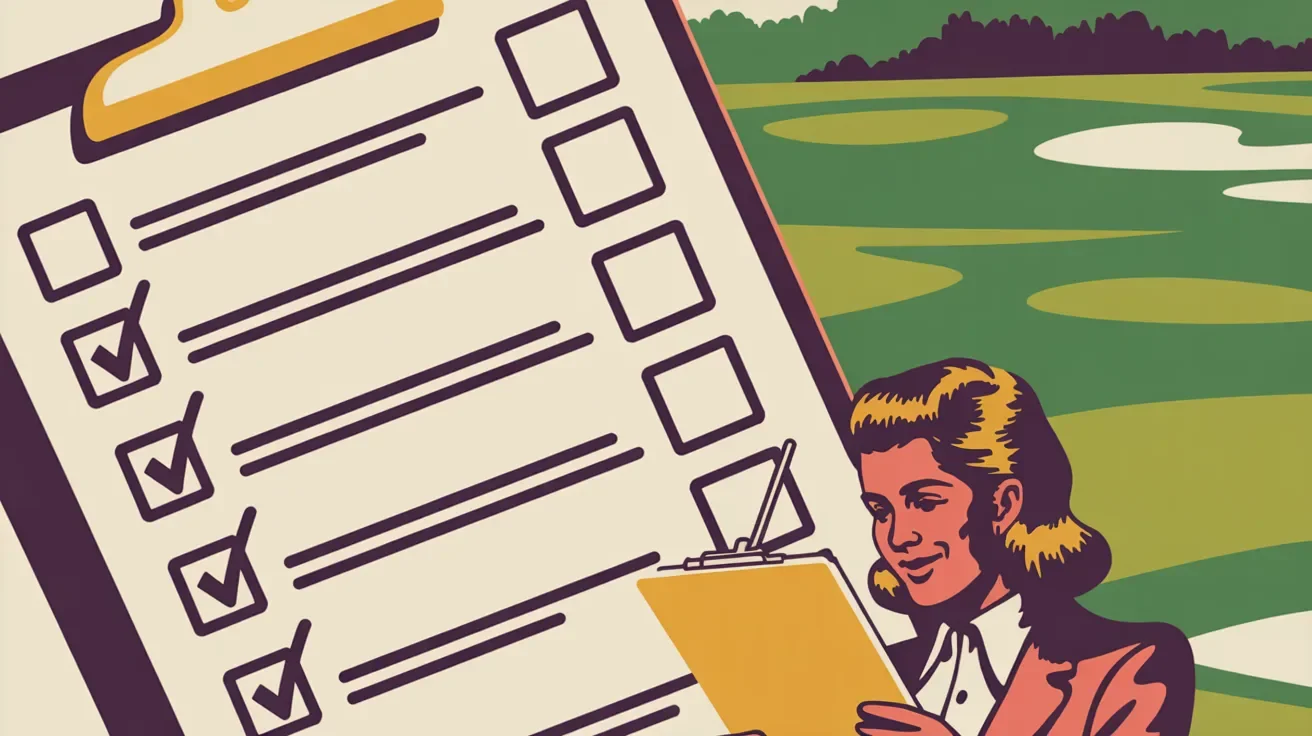
Here's your actionable checklist, organized by timeline.
3+ Months Out:
Define business objectives and success metrics
Set budget with executive approval
Develop strategic guest list
Select and book golf course
Determine format and schedule
Begin player gift sourcing
2 Months Out:
Finalize guest list and send invitations
Assign foursomes strategically
Order branded materials and signage
Confirm catering and menu selections
Brief internal team on objectives
Launch email invitation sequence
1 Month Out:
Track RSVPs and follow up with non-responders
Finalize foursome assignments
Confirm all course details in writing
Order player gifts and prizes
Create detailed day-of timeline
Brief hosts on guest profiles and goals
2 Weeks Out:
Final headcount to course and caterers
Prepare registration materials
Confirm photography arrangements
Send reminder communications to guests
Finalize awards program and remarks
Week Of:
Conduct final team briefing
Confirm all vendors and logistics
Prepare guest welcome packets
Stage all materials and gifts
Walk through day-of timeline with course
Day Of:
Arrive early for setup verification
Execute registration smoothly
Manage on-course experience
Oversee dinner and awards
Capture photos throughout
Post-Event:
Send thank-yous within 48 hours
Capture and document insights
Schedule follow-up meetings
Calculate ROI and report results
A corporate golf outing is a business investment wrapped in a recreational event. Plan it like an investment, and it delivers returns. Plan it like a party, and you've just subsidized entertainment.
Clear objectives, strategic guest lists, intentional foursome construction, professional execution, and disciplined follow-up separate outings that build business from outings that just cost money.
If your company is going to spend the resources, make them count.
Purple Wave Creative helps companies plan corporate golf outings that deliver measurable business results—from strategy through execution. Contact us if you want your next outing to be more than just a nice day on the course.