Fundraising Event Planning: The Tactical Guide to Events That Actually Make Financial Sense
I'm going to tell you something the event industry doesn't want you to hear: most fundraising events are poorly designed financial instruments.
They look successful. The room was full. The donors seemed happy. The gross revenue number gets celebrated in the board meeting. But when you dig into the actual math—expenses, staff time, opportunity cost, net revenue—the picture often isn't pretty.
This isn't because nonprofit leaders are bad at planning. It's because fundraising event planning is usually approached as event planning first and fundraising planning second. The result is parties that happen to include an ask, rather than strategic fundraising vehicles that happen to take the form of events.
This guide flips that.
We're going to talk about fundraising event planning as a financial discipline. Budgeting that accounts for true costs. Sponsorship strategy that maximizes return. Revenue stream design that makes mathematical sense. ROI thinking that tells you whether your event is actually worth doing.
This is tactical, not inspirational. I'm not going to tell you to "create an unforgettable experience" or "make donors feel special." Those things matter, but they're covered elsewhere. This is about the numbers—because if the numbers don't work, nothing else matters.
Our charity event planning guide covers the broader landscape of running fundraisers. Our nonprofit event planning guide addresses the fundamentals. This post goes deep on the financial mechanics.
If you're responsible for an event that needs to raise real money—not just host a nice party—keep reading. We're going to make sure your investment of time, budget, and organizational energy produces returns that justify the effort.
Start With Your Net Number, Not Your Gross

Every fundraising event conversation should start with one question: what do you need to net?
Not gross. Net. The money that actually goes to your mission after every expense is paid.
This seems obvious, but most event planning starts with gross revenue goals. "Let's raise $100,000 at the gala!" sounds exciting in the planning meeting. But if the event costs $60,000 to produce, you've netted $40,000—and that's before accounting for staff time.
Work backwards from your net requirement. If your organization needs this event to generate $50,000 for programs, and your anticipated expenses are $40,000, you need to gross $90,000 minimum. Now you have a real target.
Be conservative on revenue projections. Optimism is not a planning strategy. If last year's event grossed $80,000, projecting $100,000 this year requires justification—new sponsors committed, expanded guest list, proven strategies for increased giving. Hope doesn't count.
Be realistic on expense projections. Or better yet, pessimistic. Venues cost more than the base quote. Catering has service charges and gratuities. Something always comes up. Build in 10-15% contingency.
Calculate your break-even point. At what attendance level, ticket price, and giving amount do you stop losing money? Know this number cold. If break-even requires 200 attendees and you've never drawn more than 150, you have a problem to solve before you sign any contracts.
Compare net ROI to other fundraising methods. If your event nets $40,000 on $60,000 spent (67 cents returned per dollar invested), how does that compare to direct mail, major gift cultivation, or grant writing? Events aren't automatically the best use of resources.
This isn't pessimism. It's discipline. The organizations that consistently raise money through events are the ones that plan financially, not hopefully.
Building a Budget That Tells the Truth
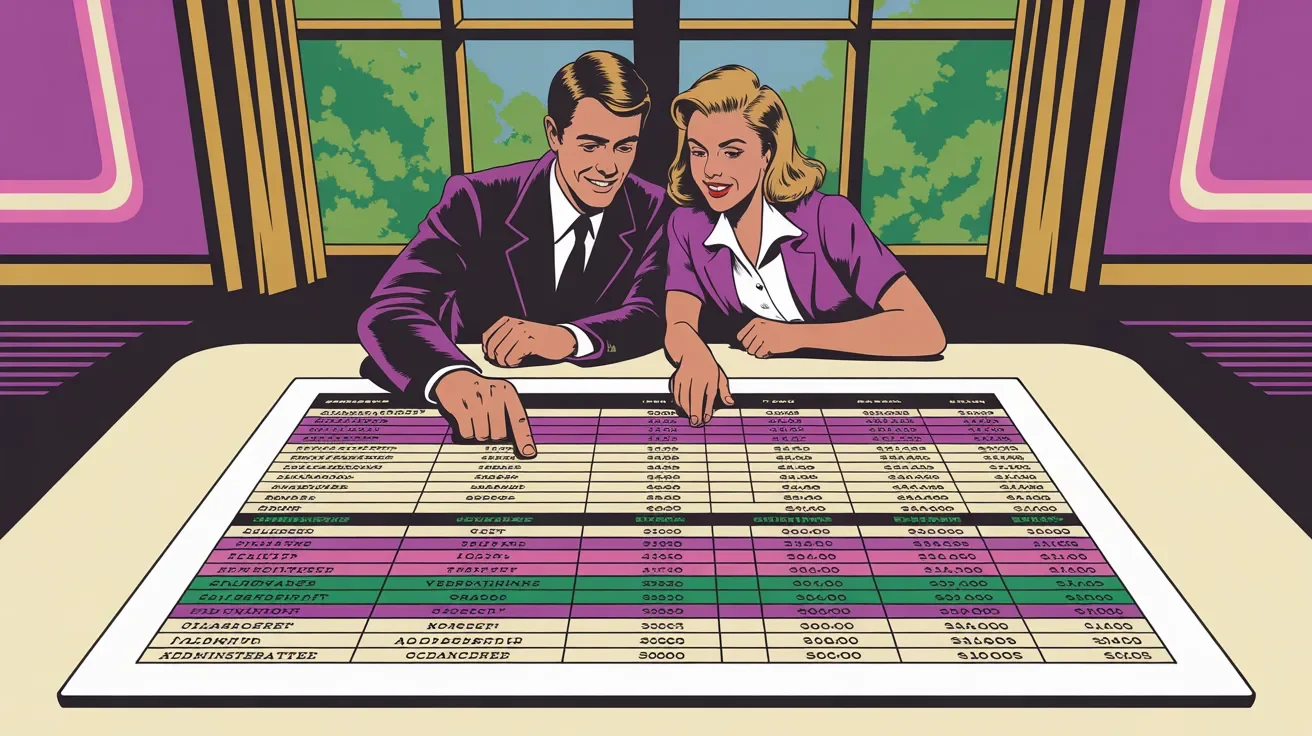
Most fundraising event budgets lie by omission. They capture the obvious expenses and ignore the hidden ones.
Here's what a truthful budget includes:
Venue and facilities. Rental fee, plus setup/breakdown fees, plus required insurance, plus parking, plus security if required. Read the contract carefully—venues hide costs in the fine print.
Food and beverage. Per-person catering cost, plus service charges (often 20-24%), plus gratuity (another 18-22% in some markets), plus tax. That $75/person dinner is actually $110 by the time you're done.
Production and décor. Rentals, linens, centerpieces, lighting, AV equipment, staging. These add up faster than anyone expects.
Entertainment. Band, DJ, speakers, performers. Plus their technical requirements, which often mean additional AV costs.
Printing and materials. Invitations, programs, signage, auction catalogs, name badges. Design costs if you're not doing it in-house.
Technology. Event registration platform fees, auction software, credit card processing (typically 2-3% of all revenue—on a $100,000 event, that's $2,000-$3,000).
Marketing and promotion. Postage, digital advertising if any, photography and videography.
Staff time. This is the big one everyone ignores. If your development director spends 200 hours on this event at an effective rate of $50/hour, that's $10,000 in organizational cost. It's not "free" because you're not writing a separate check.
Volunteer coordination. Training materials, appreciation items, management time.
Contingency. 10-15% of total budget for the inevitable surprises.
Add it all up. That's your true cost. If the number makes you uncomfortable, good. That discomfort might save you from an event that looks successful but isn't.
Our nonprofit event planning guide covers budgeting fundamentals. This level of detail is what separates events that net real money from events that just feel busy.
Revenue Streams—Designing Your Financial Model

A fundraising event isn't one revenue source—it's several. Understanding each stream helps you design an event that maximizes total return.
Ticket sales are your baseline. They should cover a meaningful portion of event costs, ideally getting you to break-even before any other revenue. If tickets alone can't cover costs, you're subsidizing attendance from other giving.
Sponsorships are often the highest-margin revenue. A $10,000 sponsorship might cost you $1,500 in benefits and fulfillment—that's an 85% margin. But sponsorships require relationships and lead time. You can't manufacture them at the last minute.
Auction revenue (silent and live) varies wildly in efficiency. Live auction items with unique experiences can generate 2-3x their value. Silent auction commodity items often sell below value after you account for solicitation time. Be strategic about what you auction.
Paddle raise / fund-a-need is where emotional giving happens. This is pure margin—no cost of goods, no fulfillment complexity. A well-executed paddle raise can be the most profitable ten minutes of your entire event.
Raffle and games can add revenue but check your state's regulations—many have strict rules about nonprofit gaming that can create legal exposure.
Post-event giving captures donors who weren't ready to give in the moment but were moved by the experience. Build follow-up systems to capture this revenue.
Design your event around your strongest streams. If you have great sponsor relationships, build an event that delivers sponsor value. If your donor base responds to emotional appeals, invest in your mission moment and paddle raise. If you have access to unique auction experiences, feature live auction prominently.
Don't treat all revenue equally. Prioritize the high-margin streams and be realistic about the low-margin ones.
Sponsorship Strategy That Maximizes Return
Sponsorships are your highest-margin revenue—if you approach them strategically.
Start cultivation months before you need commitments. Sponsorship asks made six weeks before the event feel desperate and perform poorly. Asks made six months out, grounded in relationship, perform dramatically better.
Build packages around what sponsors actually want. Some want visibility—logos, signage, mentions from stage. Some want access—premium seating, VIP reception, face time with leadership. Some want employee engagement—volunteer opportunities, team attendance. Some just want to support the mission and don't care about benefits. Ask before assuming.
Price based on value delivered, not wishful thinking. If your event draws 150 people in a regional market, you can't charge Fortune 500 sponsorship prices. Be realistic about what exposure and access you're actually providing.
Create a tiered structure with clear differentiation. Each level should feel meaningfully different from the one below. If the $5,000 and $10,000 packages look nearly identical, why would anyone pay extra?
Make the top tier exclusive. "Presenting Sponsor—Limited to One" creates urgency and justifies premium pricing. Scarcity drives value.
Calculate your true cost of sponsorship fulfillment. That $10,000 sponsorship comes with a table for ten ($1,500 value), logo placement (design time), social media mentions (staff time), and recognition from stage (program time). Your net isn't $10,000—it's $10,000 minus fulfillment costs.
Document and deliver on every promised benefit. Sponsors who feel they received value become repeat sponsors. Sponsors who feel ignored don't come back. Create a fulfillment checklist and assign someone to own it.
Follow up with impact reporting. After the event, tell sponsors what their support accomplished. Attendance numbers, funds raised, mission impact. This sets up next year's ask.
Sponsorships reward organizations that invest in relationships year-round, not just when they need checks.
The Paddle Raise—Your Highest-Margin Opportunity

The paddle raise is pure fundraising. No cost of goods. No fulfillment complexity. No auction item solicitation. Just inspired donors giving because they believe in your mission.
This is why it deserves disproportionate attention in your planning.
Everything before the paddle raise is setup. The cocktail hour warms people up socially. Dinner relaxes them. The mission video moves them emotionally. The beneficiary speaker makes impact tangible. You're building toward the moment when they'll be asked to give.
Timing matters. After dinner, before dessert. People are comfortable, attentive, and haven't mentally checked out. The bar has loosened inhibitions just enough. Energy is still high.
Use a professional or highly skilled volunteer. This is not the time for the nervous board member reading from cards. You need energy, crowd-reading ability, and the confidence to push when the room is ready and pull back when it's not. Good auctioneers pay for themselves many times over.
Create a specific, compelling need. "Support our mission" is vague. "Tonight we're raising $60,000 to send 30 kids to summer camp who otherwise couldn't afford it" is concrete, achievable, and urgent. People respond to specificity.
Start high and work down through levels. "$10,000 to start—who believes in these kids that much?" Even if nobody raises a paddle, you've anchored expectations. Then $5,000, $2,500, $1,000, $500, $250, $100. Every level gets celebrated.
Recognize donors publicly. "Table 7—the Martinez family—$5,000!" Social proof and peer pressure work. Others see giving happening and want to participate.
Have catchers ready. Volunteers moving through the room capturing names and amounts as paddles go up. Missed pledges are lost revenue.
Follow up within 24 hours. Paddle raises are pledges, not payments. Quick follow-up converts intention to actual dollars.
Auction Strategy—Effort Versus Return

Let's have an honest conversation about auctions. They can be profitable or they can be resource-draining distractions—the difference is strategy.
Silent auctions have brutal math. You need items (solicitation time). You need displays (setup time). You need tracking (volunteer time). You need checkout (more volunteer time). You need fulfillment (even more time). If your average item nets $75, you need 100 items to raise $7,500. Is that worth the collective hundreds of hours?
Most silent auction items sell below market value. Donors know they can buy restaurant gift cards themselves. They're not coming to get deals—they're coming to support you. The auction often captures less generosity than a straight donation would.
Live auctions work differently. Unique experiences—dinner with a celebrity, behind-the-scenes access, once-in-a-lifetime trips—can generate 2-3x their value because they can't be purchased elsewhere. Competition drives prices up. The energy is contagious.
Consider a smaller, curated approach. Twenty exceptional items beat two hundred mediocre ones. Less solicitation effort. More focused donor attention. Higher per-item return. And your volunteers don't spend the entire event managing auction logistics.
Or skip the silent auction entirely. Redirect that volunteer energy toward table sales and donor cultivation. Extend your paddle raise. Add a wine pull or other high-margin, low-effort alternative.
If you do run an auction, track ROI by item category. Which types of items perform? Which underperform? Use data to guide next year's solicitation strategy instead of just accepting whatever donations come in.
Consignment auction items (where you pay a percentage to an auction company) can fill gaps but eat into margins. Know your true net before committing.
The goal isn't a impressive-looking auction. The goal is maximum net revenue for minimum effort.
Ticket Pricing and Table Sales—The Foundation

Your ticket revenue should get you to break-even before any other fundraising happens. That's the goal.
If your event costs $40,000 and you're selling 200 tickets, you need $200/ticket just to cover costs. Every ticket sold below cost means other revenue streams have to compensate.
Price tickets based on true per-person cost plus margin. If your all-in cost per attendee is $150, a $150 ticket means you're losing money on every guest (because someone has to cover fixed costs too). Price for sustainability.
Table sales outperform individual tickets. A donor who commits to a $2,500 table becomes a table captain recruiting eight friends—each of whom is now exposed to your mission. You've outsourced outreach and created social accountability.
Equip table captains for success. Give them the link, the language, the deadline, and check in regularly. The table captain who hasn't filled seats two weeks out needs personal attention, not another email reminder.
Create urgency through deadlines. Early bird pricing that expires. Limited tables available. Price increases as the event approaches. People procrastinate—give them reasons not to.
Offer a "can't attend but want to support" option. Some donors prefer writing a check to dressing up and making conversation. Make it easy for them to give without attending. You keep the donation without the per-person expense.
Consider tiered ticket options. General admission, VIP with premium seating and reception access, Patron level with additional recognition. People self-select into higher giving when you make it easy.
Track your cost per ticket sold. Marketing, staff time, processing fees—it costs something to sell each ticket. Know your true acquisition cost.
Ticket sales aren't just revenue—they're the foundation that makes everything else work.
The Hidden Costs That Kill Your ROI

The expenses on your budget spreadsheet are just the beginning. The costs that truly kill ROI are the ones nobody tracks.
Staff time is not free. Your development director has a salary. The hours they spend on event planning have real cost—and opportunity cost. What donor cultivation, grant writing, or major gift work isn't happening because they're coordinating centerpieces?
Calculate it: hours spent × loaded hourly rate = true staff cost. Add it to your budget. Watch the ROI picture change.
Volunteer time has limits. Volunteers burning out on event work aren't available for other organizational needs. And burned-out volunteers often become former volunteers. The hidden cost is future capacity lost.
Opportunity cost is real. The six months your team spends on the gala is six months not spent on other fundraising strategies. What could that time have produced through different channels?
Board member time matters. Every hour board members spend on event logistics is an hour not spent on governance, fundraising, or strategic connections. Is table decoration really the highest use of your board chair's time?
Organizational distraction has costs. When the event becomes all-consuming, other programs suffer. Staff attention fragments. Priorities blur. The mission work that donors are supposedly supporting gets less support.
Stress and morale affect retention. Events are stressful. If that stress contributes to staff turnover, the replacement cost (typically 50-200% of salary) dwarfs any line item on your event budget.
Post-event recovery is real. The week after a major event, productivity craters. Staff are exhausted. Volunteers need appreciation. Follow-up competes with returning to normal operations. Budget time for this.
Track all of it. Not to make yourself feel bad—to make informed decisions about whether events deserve the resources you're investing.
Measuring What Actually Matters

Stop celebrating gross revenue. It's a vanity metric that obscures more than it reveals.
Here's what to measure instead:
Net revenue after all costs. Gross minus expenses minus staff time minus volunteer coordination. This is the actual money available for mission. It's the only number that matters financially.
ROI percentage. Net revenue divided by total investment (including staff time). If you invested $50,000 and netted $30,000, your ROI is 60%. Now you can compare to other fundraising methods.
Cost per dollar raised. Total expenses divided by net revenue. If it costs you $0.60 to raise $1.00, is that acceptable? Depends on the alternatives.
New donor acquisition. How many first-time donors did the event produce? These have long-term value if you retain them. An event that loses money but acquires 50 new donors might still be worthwhile.
Donor retention and upgrade. Did existing donors give more than last year? Did lapsed donors return? Events should strengthen relationships, not just extract transactions.
Sponsor retention and growth. Did sponsors renew? At the same level or higher? Declining sponsor participation signals problems.
Attendance versus goal. Did you hit your target? If not, why? Understanding attendance drivers helps future planning.
Volunteer satisfaction. Would your volunteers do this again? If your event burns out your volunteer base, you're borrowing from future capacity.
Staff assessment. Honest feedback from the team that executed. What worked? What didn't? What should change?
Board and stakeholder perception. Sometimes events serve relationship purposes beyond pure financials. Capture that feedback too.
Document everything for next year. The insights you remember twelve months from now are the ones you write down today. Create a post-event report that tells the full story—not the PR version, the honest version.
When to Kill an Event (And What to Do Instead)

Some fundraising events should die. Knowing when to let go is as important as knowing how to execute.
Kill it if the ROI consistently underperforms other methods. If your event returns $0.50 per dollar invested while direct mail returns $3.00, the event needs to justify its existence with non-financial benefits—or be retired.
Kill it if it's burning out your team. Exhausted staff and volunteers are organizational liabilities. An event that produces resentment alongside revenue isn't sustainable.
Kill it if attendance is declining despite best efforts. Events have lifecycles. What energized donors ten years ago might feel stale today. Declining attendance often signals a format that's run its course.
Kill it if you're doing it because "we've always done it." Tradition is not a strategy. Every event should earn its place in your annual plan through demonstrated results.
What to do instead:
House parties and intimate gatherings. Lower cost, higher per-person engagement, easier to execute. A donor hosts; you provide the program and the ask.
Giving days and campaigns. Peer-to-peer fundraising, matching gift challenges, concentrated energy around a specific date. Lower overhead, broader reach.
Major gift cultivation events. Small gatherings for significant prospects. Site visits, private dinners, behind-the-scenes access. High-touch, high-return.
Direct mail and email appeals. Unsexy but effective. Low cost, proven returns, scalable.
Monthly giving programs. Sustainable revenue that doesn't require annual event heroics. A donor giving $50/month produces $600/year without any gala planning.
Grant seeking. If your staff is skilled, grants can produce better ROI than events with less organizational disruption.
Events are one tool among many. Don't let them dominate your fundraising strategy just because they're visible and exciting. Follow the ROI.
Fundraising event planning isn't about creating beautiful parties. It's about engineering financial outcomes that justify the investment.
The organizations that consistently raise money through events approach them with financial discipline—honest budgeting, strategic revenue design, ROI measurement, and willingness to change or kill what isn't working.
If your events feel successful but the numbers don't add up, something needs to change. Start with the math.
Purple Wave Creative helps nonprofits design fundraising events that actually fundraise—with realistic budgets, smart revenue strategies, and honest assessment. Contact us if you want a partner who cares about your net, not just your gross.